
Our Aim: A Safe, Kind, and Connected School Environment
At Adventure School, we want every student to feel safe, confident, and respected. We are committed to teaching children how to build positive relationships, accept others for who they are, and navigate the everyday ups and downs of friendships – including how to handle conflict and bullying.
A Shared Responsibility: Every staff member shares the responsibility for your child’s well-being, working together to solve problems quickly and keep our school culture strong.
Rights and Responsibilities
A great school environment is a team effort. We believe everyone has equal rights, and with those rights comes the responsibility to look after one another.
- Safety: The right to feel safe, and the responsibility to make others feel safe.
- Respect: The right to be treated with dignity, and the responsibility to treat others the same way.
- Learning: The right to learn and teach without interruption, and the responsibility to let others focus.
- Inclusion: The right to have cultural heritage and unique differences valued, and the responsibility to respect what makes others unique.
Self-Awareness & “The Adventure Way”
At the heart of our behavior plan is Self-Awareness. We actively teach students how to grow this trait through five key habits:
- Understanding Our Impact: Realising how our words and actions make others feel.
- Managing Big Emotions: Learning to pause and check in with feelings to make calm choices.
- Reflecting on Mistakes: Thinking about what could be done differently next time.
- Balancing Kindness and Boundaries: Standing up for oneself while staying kind.
- Noticing Others: Recognising and responding to the needs of peers.
How We Handle Challenges: Consequences & Growth
We view mistakes as opportunities to learn. When a student’s actions negatively impact others, we hold them accountable in a way that builds responsibility, not shame.
- Natural Consequences: We focus on logical consequences rather than detentions. For example, if a student creates a mess or damages property, they will spend time cleaning or helping to fix it.
- Discretion & Respect: We intentionally choose approaches that support children without publicly singling them out or causing embarrassment. Our goal is always reflection and growth.
What Happens When an Incident Occurs?
We categorise incidents to ensure every situation is handled fairly and consistently:
- Minor Playground Incidents: Handled on the spot by the duty teacher, who informs the classroom teacher to monitor.
- Physical or Serious Incidents: The student moves to a quiet space to calm and speak with a school leader. Team Leaders or a Deputy Principal will determine the most fitting way forward. Parents are always contacted.
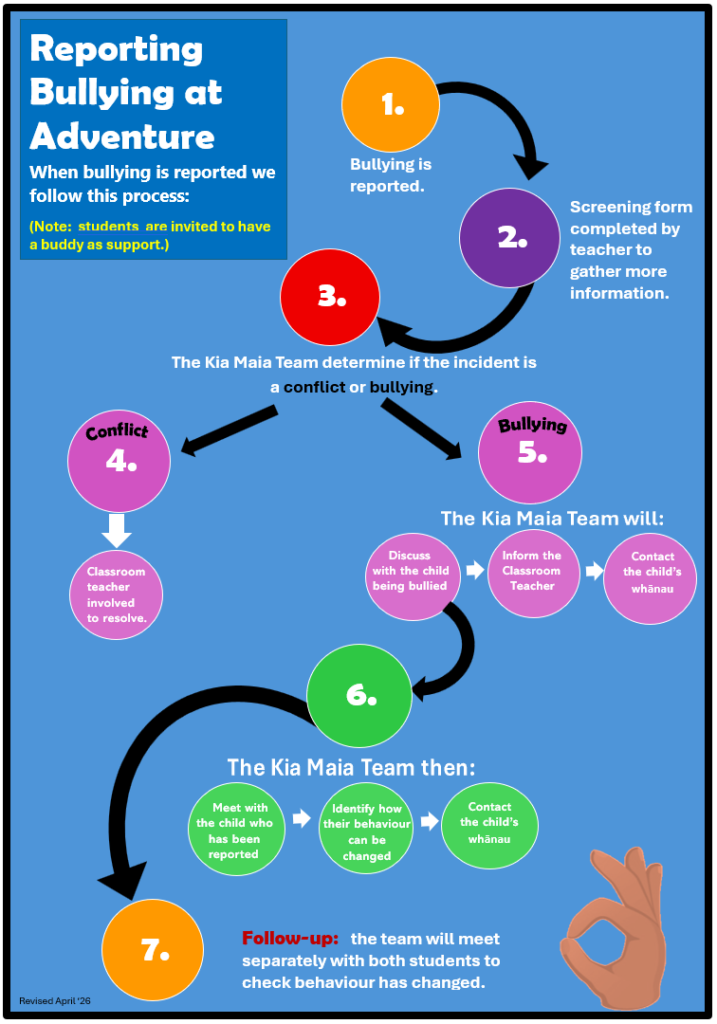
- Reported Bullying: A formal review is actioned immediately and passed directly to a Deputy Principal.
Our Approach to Preventing and Handling Bullying
At Adventure School, we believe every child has the right to learn and play in a safe, kind environment. We take any form of bullying behaviour very seriously because it goes directly against our school values. While we work hard to prevent it, bullying can happen at times in any school. When it does occur, we take immediate action, investigate thoroughly, and work closely with families to resolve it.
What Bullying is (and What it is Not)
Following official New Zealand education guidelines, we define bullying as:
Bullying IS: Harmful behaviour or treatment that is deliberate, repeated over time, and targeted at someone who feels less powerful.
Bullying IS NOT: One-off conflicts, heat-of-the-moment arguments, single playground fights, or social misunderstandings. (Note: While these are not bullying, they are still handled quickly and using standard school consequences).
The 4 Types of Bullying We Teach Students to Recognise:
- Physical: Hitting, kicking, pushing, or damaging property.
- Verbal: Name-calling, mocking, threats, or racist remarks.
- Indirect: Spreading rumors, purposeful exclusion, or social exclusion.
- Cyber: Unkind comments, threats, or images sent via text, email, or social media.
The KIA MĀIA (“Be Brave”) Team
To ensure potential bullying cases are handled with the highest care, our dedicated Kia Māia Team steps in to investigate and resolve these situations.
- Parents Are Always Informed: If a situation is identified as bullying, parents of all children involved will be contacted..
- Check-Ins: One week after the incident is resolved, the team follows up with the children to ensure they feel safe and that the behaviour has stopped.
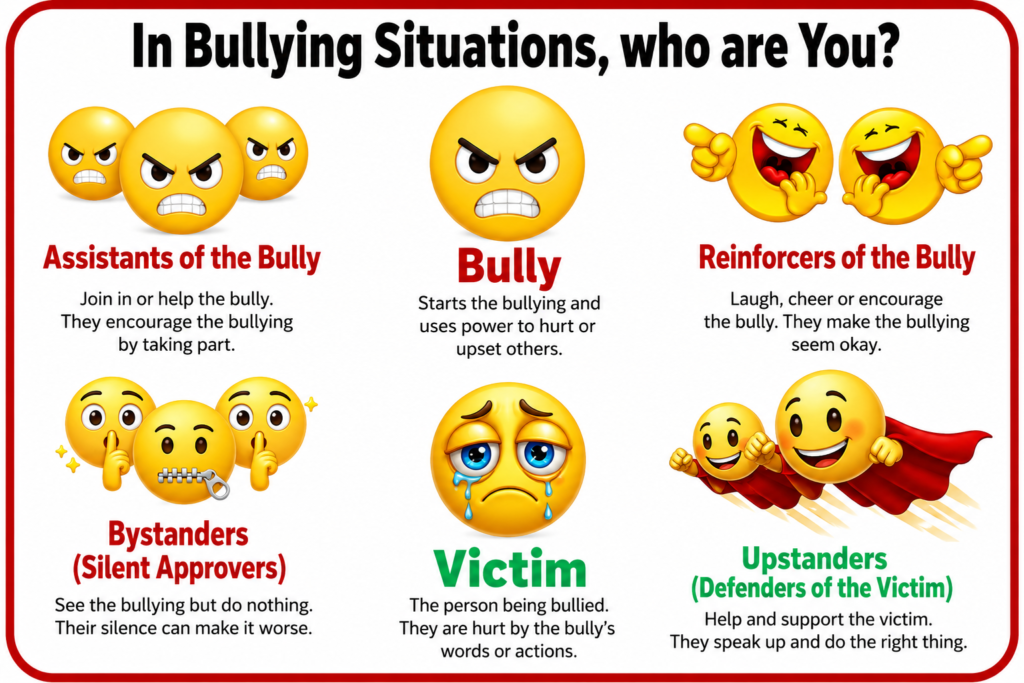
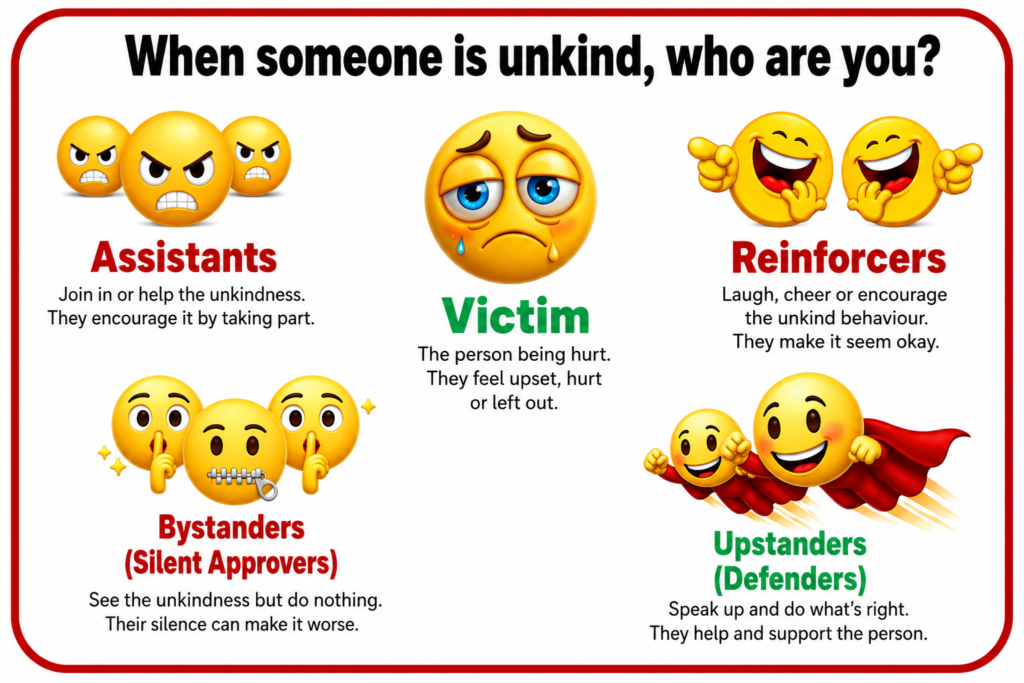
We encourage our children to be Upstanders and seek adult help when they become aware of bullying or unkindness.
Te Whare Ata: A Place of Reflection and Growth
We believe that when a student makes a significant mistake, they need a quiet, supportive space to think about their actions, understand the impact they’ve had, and learn how to make things right. This dedicated space is called Te Whare Ata (The Place of Reflection).
In Te Whare Ata students are guided through:
- Calm Reflection: Taking time to cool down and look objectively at what happened.
- Behavior Coaching: Working one-on-one with a school leader to learn better ways to handle conflict or big emotions.
- Restorative Actions: Giving back to the school community (e.g. helping out around the school) to make up for the disruption caused.
How Does a Student Get Referred?
To ensure this space is used effectively and fairly, we follow clear guidelines:
- Students do not get sent here for minor, first-time incidents. It is used as a formal next step if classroom or team-level consequences have not resolved the behaviour.
- The space is located in the Hive and is always directly supervised by a member of our Senior Leadership Team.
- Careful Consultation: A student is only referred to Te Whare Ata after their classroom teacher has formally consulted with their Team Leader or Senior Management to ensure it is the right approach for that child.
- Working Together With Parents
We can only fix a problem if we know about it. We want our community to feel empowered to voice concerns early.
For Students: Speaking Up Shows Courage
We teach students that reporting issues is an act of courage, not “snitching.” We encourage them to:
- Identify a trusted adult at school.
- Share issues early (the day they happen).
- Be an upstander and look out for peers.
For Parents: Partnering With Us
You know your child best. If they come home upset or their behaviour changes, please don’t wait to see if it blows over.
- Your First Port of Call: Always reach out to your child’s classroom teacher first. They see your child daily and are best placed to investigate.
- A Collaborative Approach: We view your insights as a partnership. We will listen, investigate, and collaborate with you on a practical plan to support your child.
Our Collective Goal: By working as a team – students, parents, and teachers – we can address social challenges swiftly, keeping our school a positive and happy and safe environment for everyone.